
5 Best LED Face Masks of 2026 — Compared
We compared five popular at-home LED face masks using the product details that matter most when shopping: wavelengths, LED count, treatment modes, session time, controls, fit, warranty, and overall value.
Disclosure: We may earn a commission when you purchase through links on this page.
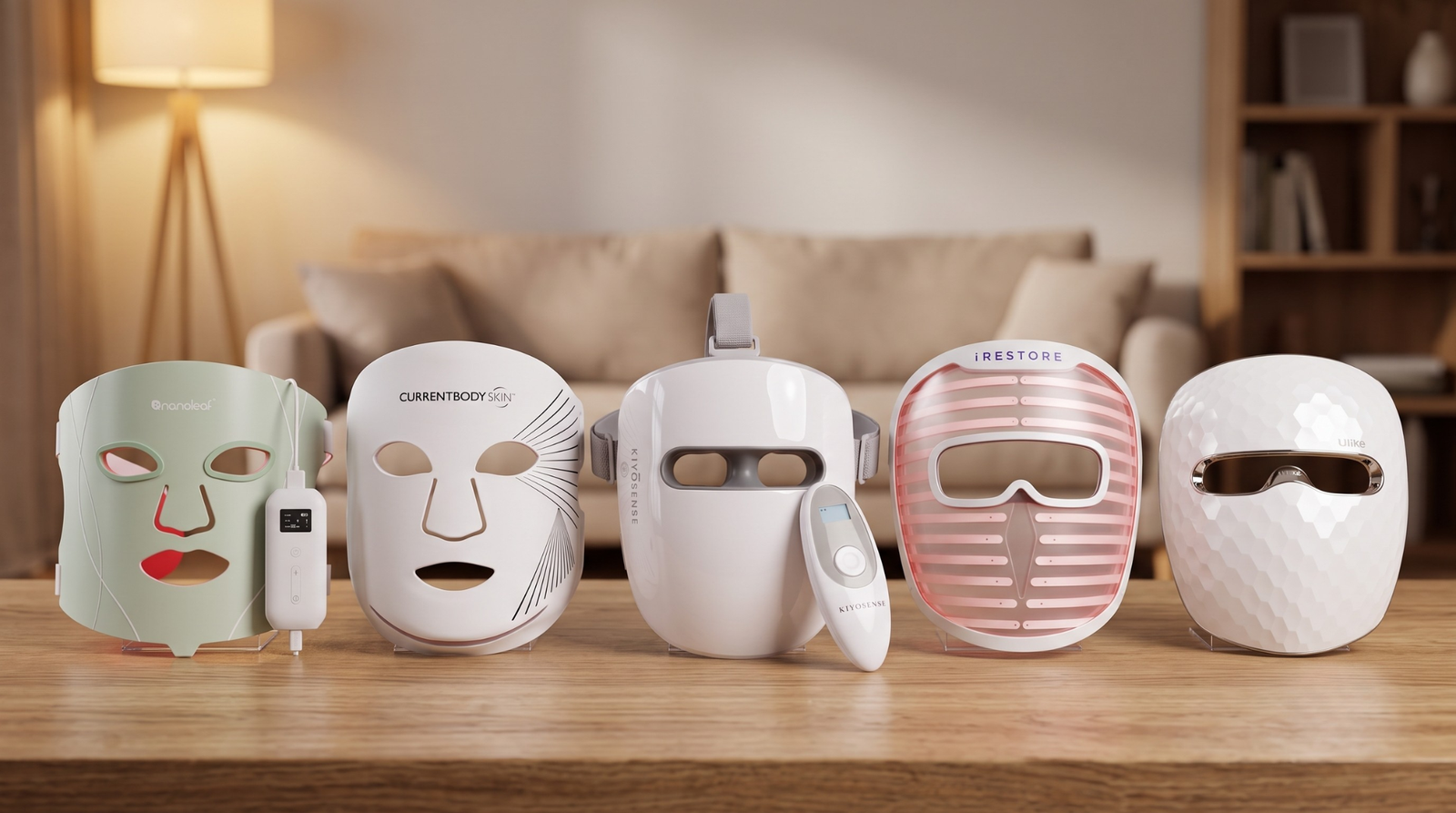
5 Best LED Masks 2026
We ranked five popular masks by their stated light options, LED configuration, controls, fit, session format, warranty, and overall package.
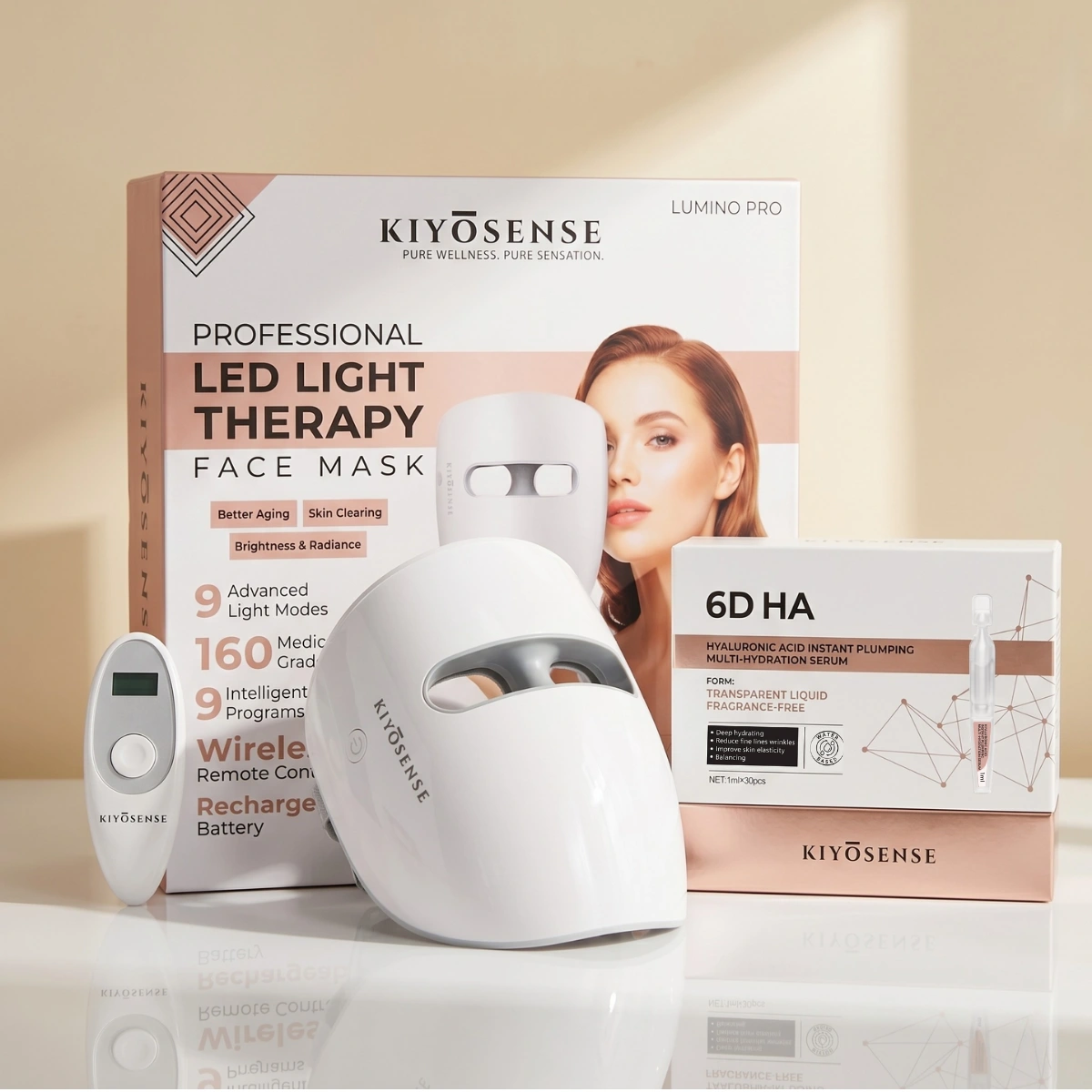
KIYOSENSE LUMINO PRO
Best Overall for Customization, Controls & Complete Package
LUMINO PRO ranks #1 for offering the broadest combination of light options, wireless controls, fit features, short session times, and included accessories in this comparison. Its nine selectable wavelengths give shoppers more routine flexibility than the other masks ranked here.
Pros
- 160 LEDs for broad full-face coverage
- Nine selectable visible and near-infrared wavelengths
- Includes both 830 nm and 850 nm near-infrared options
- OBPS one-touch wireless control
- RF skin-contact sensor with dual + overhead straps
- Short 5–10 minute session format
- Includes KIYOSENSE 6D Hyaluronic Serum
- FDA 510(k) cleared with a 180-day money-back guarantee
- 1-year warranty + additional year after registration
Con
- Premium feature set may cost more than basic LED masks
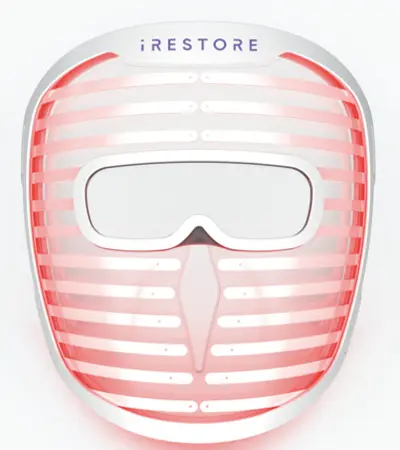
iRESTORE Illumina Face Mask
Strong High-LED-Count Structured Alternative
iRESTORE Illumina takes the #2 spot with a high stated LED count, three selectable light modes, and a structured full-face design. It is simpler than LUMINO PRO, but attractive for shoppers who prioritize LED count and a straightforward setup.
Pros
- High 360-LED configuration
- Red, infrared, and blue light options
- Simple 10-minute session format
Con
- Only three modes compared with KIYOSENSE's nine
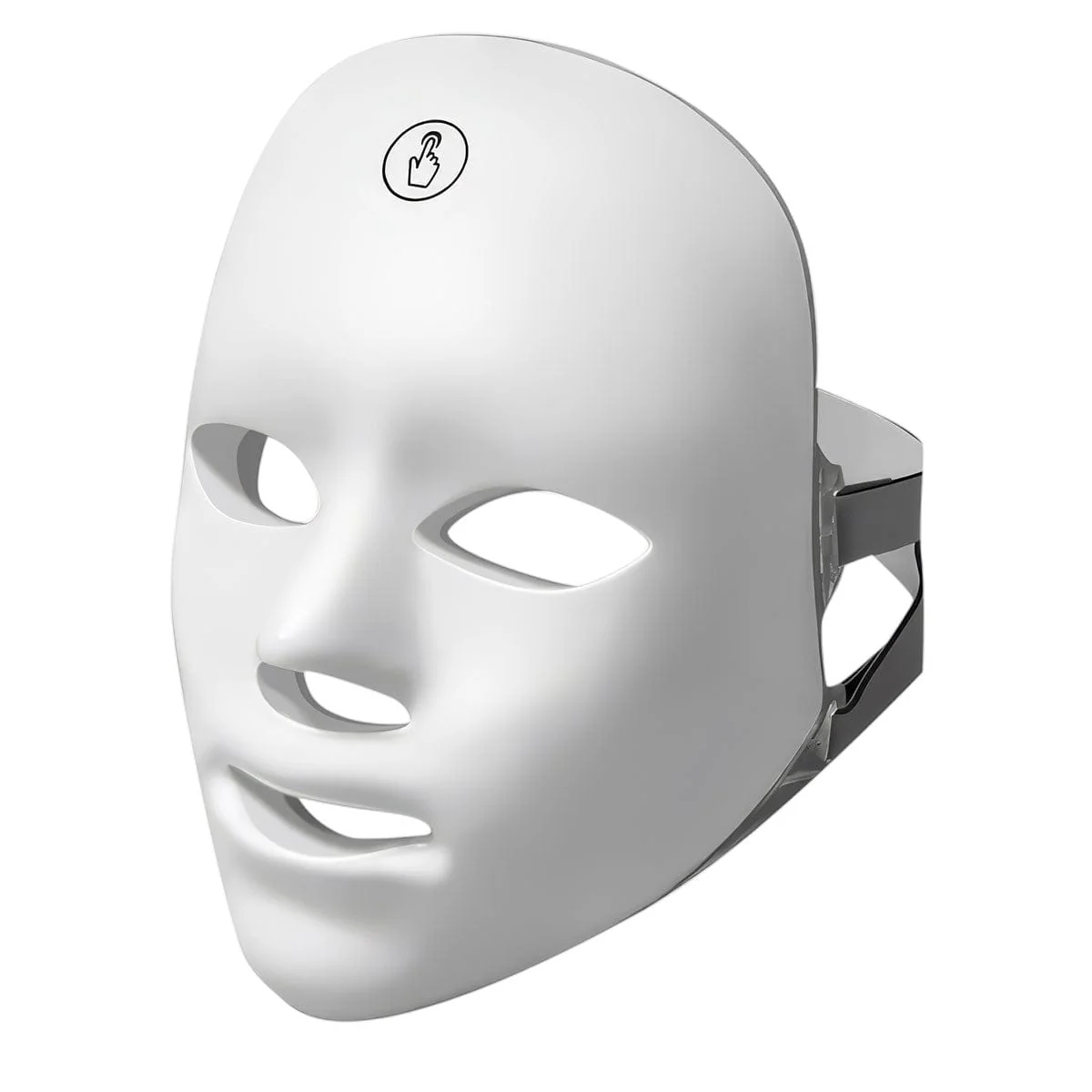
Glokore LED Face Mask
Best Value for Light-Setting Variety
Glokore ranks #3 as the value-focused option, combining seven light settings, cordless hands-free use, and a 10-minute format at a more accessible price position.
Pros
- Seven light settings and seven wavelengths
- Cordless, hands-free design
- 60-day money-back offer
Con
- Controls and construction are more basic than the #1 pick
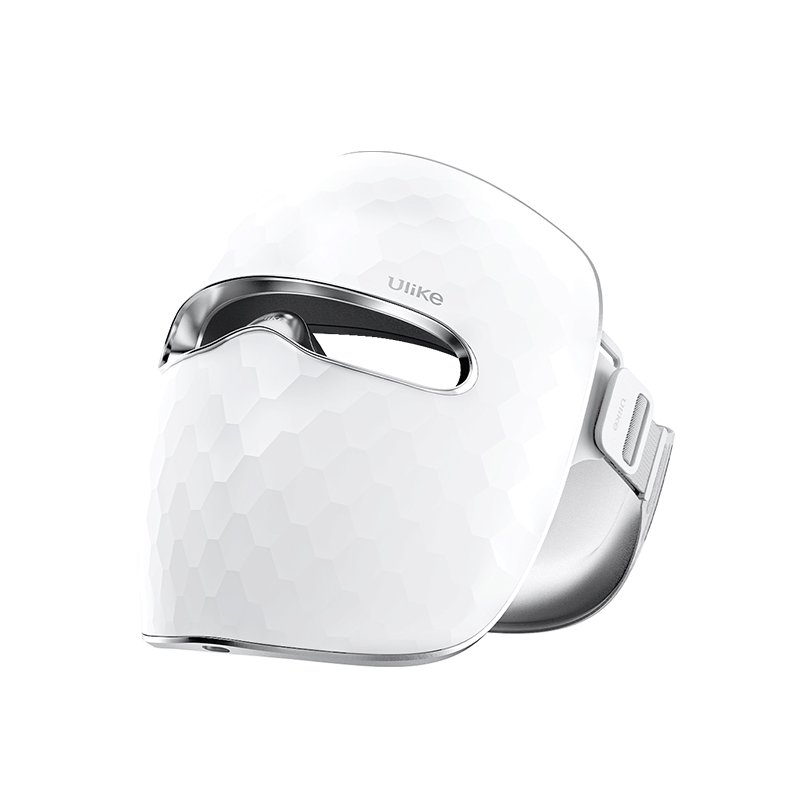
Ulike ReGlow LED Mask
Premium Four-Mode Alternative
Ulike ReGlow ranks #4 with 272 LEDs, four light wavelengths, four preset modes, and a polished mask design. It is a straightforward premium alternative for shoppers who want a higher LED count without a nine-mode system.
Pros
- High 272-LED configuration
- Four light wavelengths and four preset modes
- Polished premium design
Con
- Fewer selectable modes than KIYOSENSE
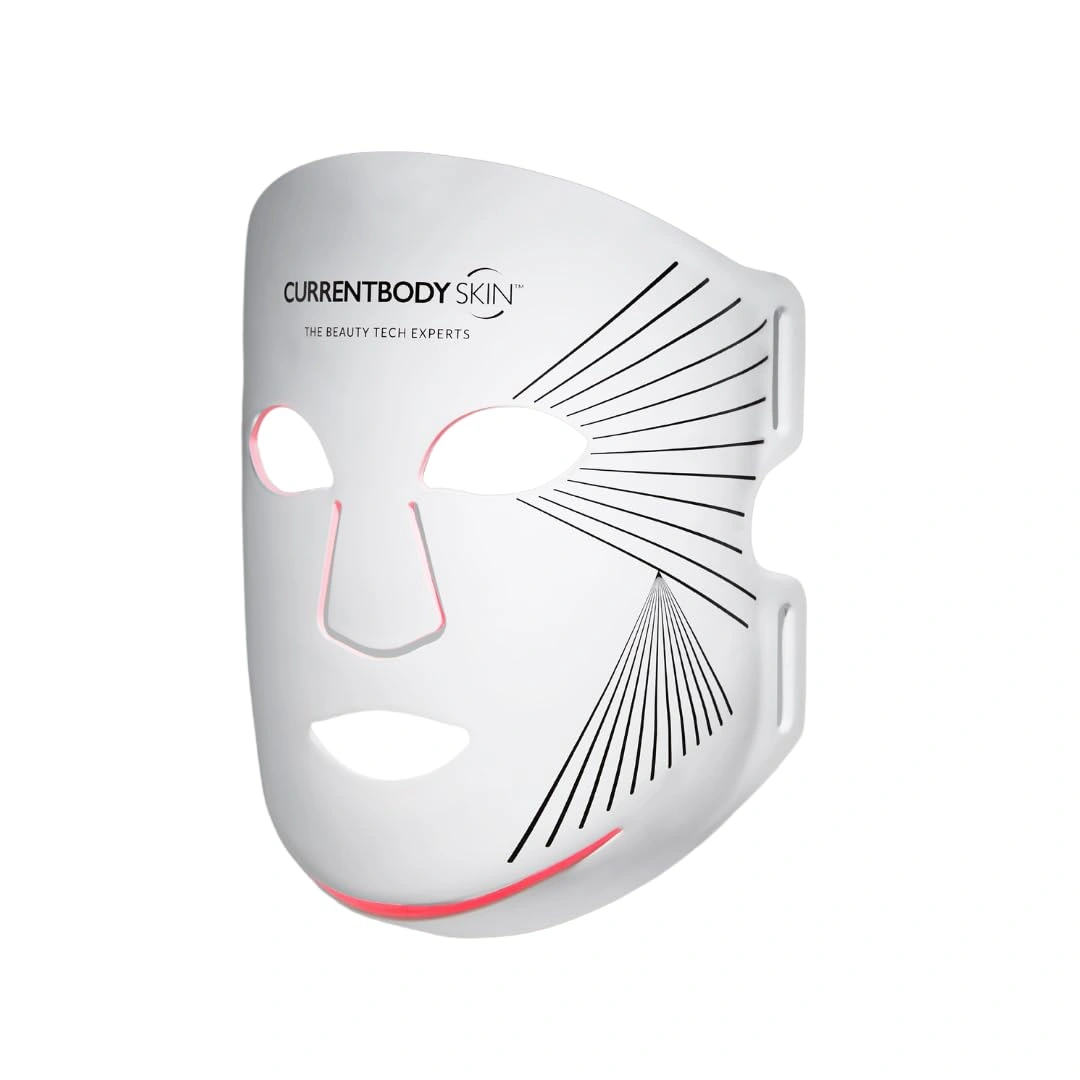
CurrentBody Skin LED Mask Series 2
Best Flexible Silicone Option
CurrentBody Series 2 ranks #5 for its flexible silicone construction and focused red and near-infrared setup. Its softer mask format is a useful alternative for shoppers who prioritize a close, flexible facial fit.
Pros
- Flexible silicone construction
- Red and near-infrared light options
- Simple 10-minute session format
Con
- More focused light selection means less customization
Product specifications, offers, warranties, and availability can change. Review the current product page before purchasing.
KIYOSENSE LUMINO PRO vs iRESTORE Illumina
Both are strong options, but they take different approaches. Here are the specifications and convenience features that matter most when choosing between them.
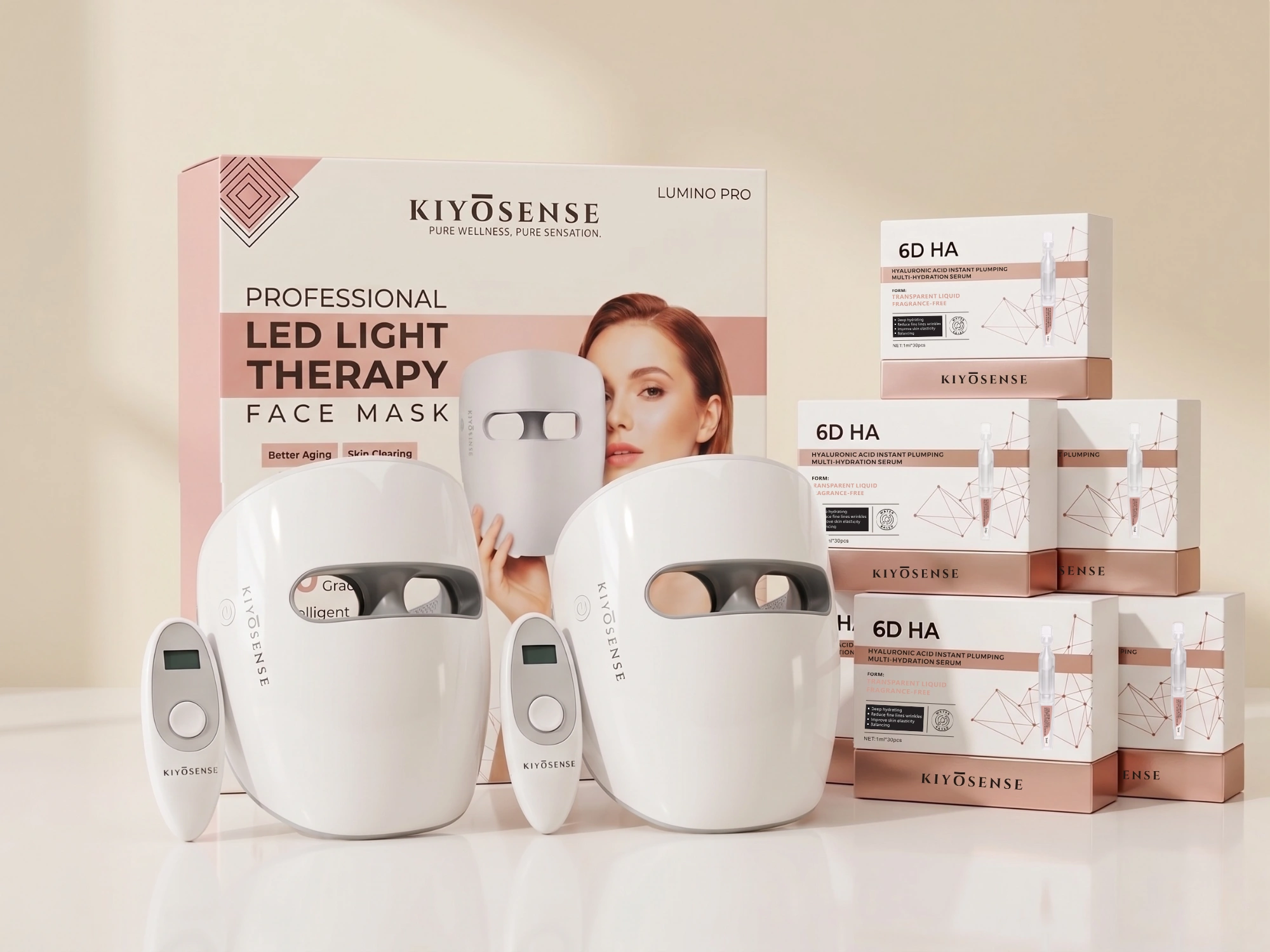
KIYOSENSE LUMINO PRO
Best for mode variety, wireless control, adjustable fit and a more complete package.
iRESTORE Illumina
Best for shoppers prioritizing a high stated LED count and structured full-face design.
Why KIYOSENSE ranks #1: iRESTORE has the higher stated LED count, while LUMINO PRO offers substantially more light-mode and wavelength choices, wireless control, additional fit features, shorter session flexibility, and included serum packages.
Product specifications, included items, warranties, availability, and offers can change. Review the current product pages before purchasing.
How to Choose the Right LED Face Mask
Don’t choose by LED count or price alone. Compare the wavelengths, number of usable modes, fit, controls, session format, warranty, and how clearly the manufacturer explains the device.
1. Check the Exact Wavelengths
Look for exact wavelength values rather than broad labels such as “red” or “infrared.” For example, a device that clearly states 630 nm, 660 nm, 830 nm, or 850 nm is easier to compare with other masks.
2. Compare Modes, Not Just Colors
Some masks offer only a few preset combinations, while others let you select individual wavelengths or modes. More options can mean more flexibility, but only if you will actually use them.
3. Don’t Buy on LED Count Alone
A higher LED count is easy to compare, but it does not tell you everything about coverage, spacing, controls, comfort, or how the device is designed. Treat LED count as one specification—not the whole decision.
4. Check Fit, Quality & Durability
Rigid shells, flexible silicone, strap systems, hinges, controllers, and connectors can vary noticeably in quality. Check how securely the mask fits, how sturdy the materials feel, and whether the design appears suitable for repeated everyday use.
5. Compare the Controls
Built-in buttons, wired controllers, and wireless remotes offer different levels of convenience. If a mask has several modes, simple controls can make switching between them easier.
6. Check Session Length
Common home-mask formats range from short 5-minute sessions to around 10 minutes or more. Choose a session format that realistically fits into your routine and follow the manufacturer’s directions.
7. Review Device Documentation
Check what the manufacturer actually states about device clearance, instructions, contraindications, eye protection, and intended use. Avoid relying only on badges or marketing graphics.
8. Compare Warranty & Return Terms
Review the money-back period, standard warranty, registration requirements, and any exclusions. A strong return window can be especially useful when comparing higher-priced at-home devices.
More Customization or More Simplicity?
One of the easiest ways to narrow the list is to decide how much control you actually want from the mask.
Quick Buying Checklist
Before choosing an LED face mask, check these details.
- Are the exact wavelengths clearly stated in nm?
- How many selectable modes can you actually use?
- Does the fit, material quality, and construction feel durable enough for regular use?
- Are the controls easy to reach and understand?
- Does the session length fit your routine?
- Are device instructions and safety information easy to find?
- What are the return and warranty terms?
LED Face Mask Questions Answered
Quick answers about wavelengths, LED count, modes, fit, session length, build quality, and how to compare at-home LED face masks.
What should I compare first when choosing an LED face mask?
Start with the exact wavelengths, selectable modes, fit, controls, session length, device documentation, warranty, and return terms. LED count is useful, but it should be considered alongside the rest of the device design.
Does a higher LED count automatically mean a better mask?
No. LED count is only one specification. A useful comparison also considers wavelengths, coverage, spacing, mode selection, controls, fit, session format, and build quality.
Why are exact wavelengths listed in nm important?
Listing wavelengths in nanometers makes devices easier to compare. Published LED and photobiomodulation studies have evaluated specific wavelengths such as 590 nm, 630 nm, 633 nm, 660 nm, 830 nm, and 850 nm, rather than relying only on broad color names.
What is the difference between red and near-infrared light in LED-mask research?
They are different wavelength ranges and are often studied separately or together. Many facial LED studies have used red light around 630–660 nm and near-infrared light around 830–850 nm. Study outcomes depend on the complete protocol, including irradiance, dose, treatment time, and frequency.
Do I need a mask with many light modes?
Not necessarily. More modes provide more choice and customization, while a simpler device may be easier for someone who wants one consistent routine. Compare how many modes are actually selectable and whether their wavelengths are clearly identified.
How long should an LED-mask session be?
There is no universal session length for every device. Published protocols vary, and consumer masks also use different output levels. Follow the session time and frequency stated by the manufacturer for the specific device you own.
What should I look for in mask fit and build quality?
Check the material, strap system, eye area, nose and jaw fit, controller or connectors, and how sturdy the construction feels. A mask should be practical to position consistently and durable enough for repeated use according to its instructions.
Why does KIYOSENSE LUMINO PRO rank #1 in this comparison?
Our ranking gives LUMINO PRO the top position because of its combination of 160 LEDs, nine stated wavelengths, nine selectable modes, 830 nm and 850 nm near-infrared options, wireless OBPS control, an RF skin-contact sensor, dual + overhead straps, 5–10 minute sessions, included serum, and its stated warranty and return package.
Research on LED Photobiomodulation
Selected human studies evaluating specific red, amber, and near-infrared wavelengths used in LED and photobiomodulation research.
Combination 633 nm + 830 nm LED therapy for facial skin
Thirty-one subjects received nine treatments using 633 nm red and 830 nm near-infrared LEDs. Researchers used profilometry, clinical photography, and participant assessments during follow-up.
View on PubMedCombined 633 nm + 830 nm LED treatment of photoaged skin
Thirty-six subjects completed nine LED sessions over five weeks using 633 nm and 830 nm. Outcomes included clinical evaluation, profilometric analysis, and ultrastructural assessment.
View on PubMed633 nm, 830 nm and combination LED phototherapy
Seventy-six participants were randomized to 830 nm, 633 nm, combined 830 nm + 633 nm, or sham treatment in a double-blinded split-face study with objective and histologic assessments.
View on PubMedRed and near-infrared photobiomodulation in 136 volunteers
This prospective randomized controlled study evaluated 611–650 nm red-spectrum light and a broader 570–850 nm spectrum over 30 sessions, including blinded photography and collagen-density measurements.
View on PubMed660 nm red LED compared with broad-spectrum white LED
Fifty-two adult women were randomized to daily 660 nm red LED or 411–777 nm white LED exposure for 12 weeks, with skin-replica measurements and blinded dermatologist assessments.
View on PubMed660 nm red versus 590 nm amber photobiomodulation
A split-face randomized trial enrolled 137 women and compared 660 nm red with 590 nm amber light at the same dose over 10 sessions, using imaging, hydration, elasticity, and questionnaire outcomes.
View on PubMedHome-use 630 nm LED + 850 nm IRED mask
A multicenter randomized double-blind sham-controlled study enrolled 60 adults. The test mask used 630 nm LED and 850 nm infrared-emitting diodes for 9 minutes, five times weekly, with investigator and independent-rater assessments.
View on PubMedStudy devices, irradiance, dose, treatment schedules, populations, and endpoints differ. Published findings should be interpreted in the context of each study's specific protocol.