
5 Best Hyaluronic Acid Serums of 2026 - For Dry Skin & Moisture
We compared 40+ hyaluronic acid serums across formula, HA system, texture, packaging, ease of use and overall value to find the five options that stood out most.
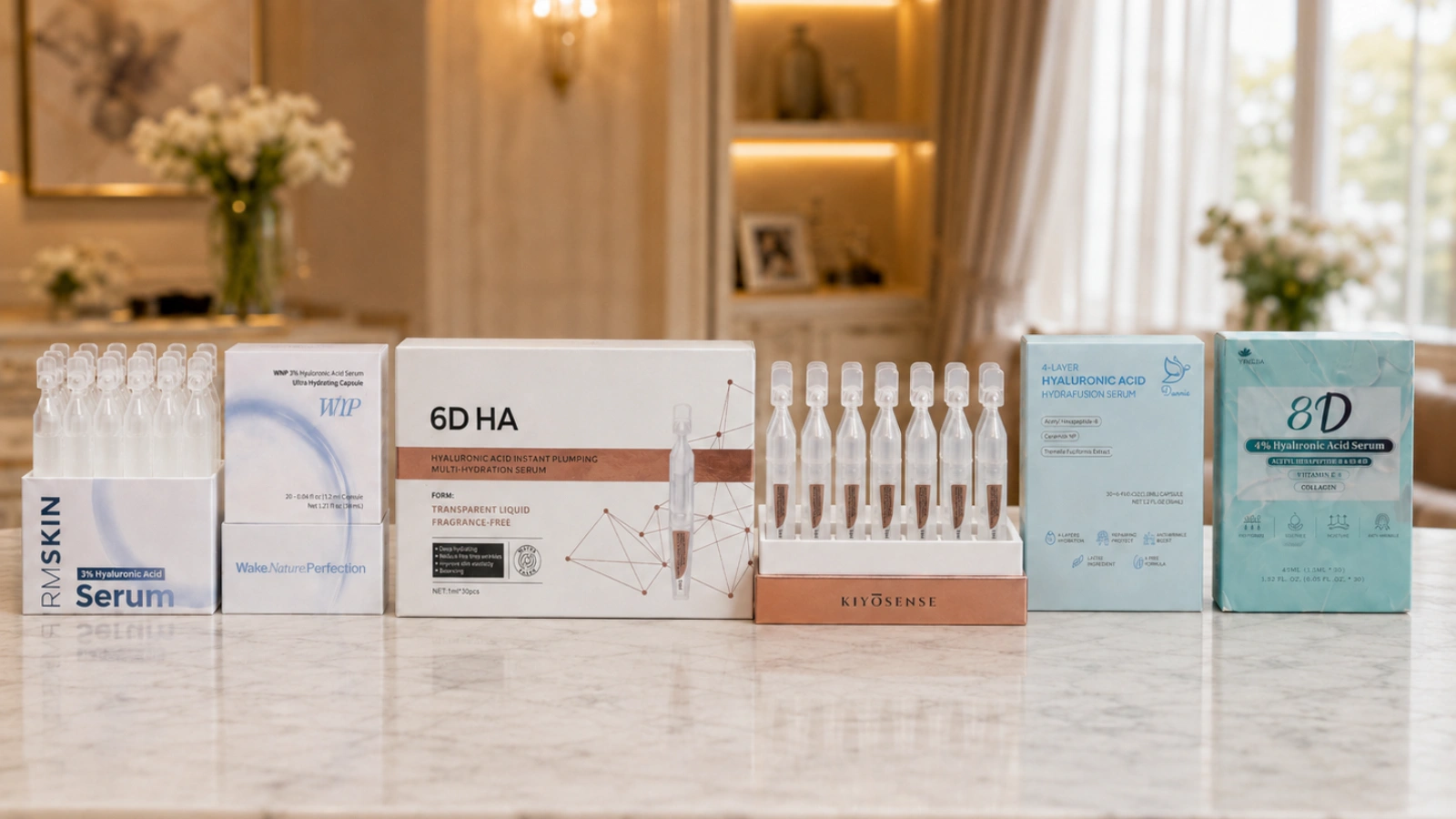
5 Best Hyaluronic Acid Serums of 2026
Short on time? Compare our five shortlisted hyaluronic acid serums below, including their hydration approach, formula format and key differences, or continue to the full reviews for a closer look.
Want to compare before deciding? Continue below to see the Factors to Consider when choosing a hyaluronic acid serum and the What to Avoid section covering details that can be easy to overlook before moving on to our full reviews.
Factors to Consider While Buying a Hyaluronic Acid Serum

Quality of the Formula
A good hyaluronic acid serum should have a balanced formula built around hydration and skin-conditioning ingredients. Look beyond the wording on the front of the bottle and consider how complete and well-formulated the serum is for regular skincare use.
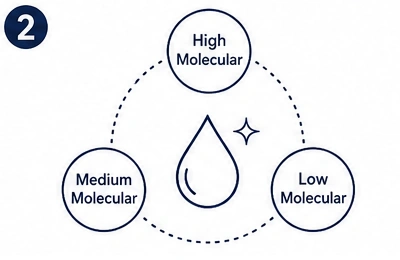
Types of Hyaluronic Acid
Some serums use one form of hyaluronic acid, while others combine multiple molecular sizes. A broader HA system can make the formula feel more complete, but a larger number alone does not automatically make one serum better.
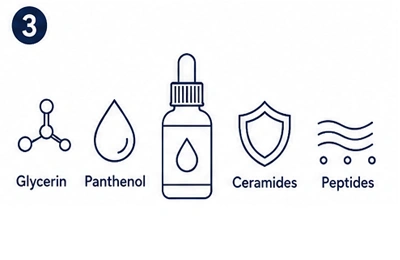
Hydrating & Supporting Ingredients
Hyaluronic acid can be paired with ingredients such as glycerin, panthenol, ceramides, and peptides. These supporting ingredients can add hydration and help make the overall serum formula more balanced for everyday skincare.
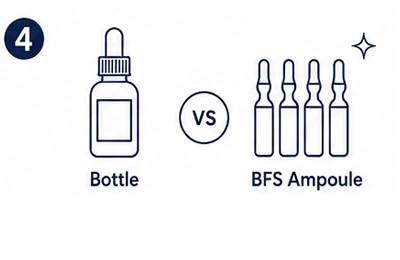
Bottle vs BFS Ampoule Packaging
Serums are commonly packaged in bottles or individually sealed BFS ampoules. Bottles are convenient for daily use, while BFS ampoules keep each portion separately sealed until it is ready to be opened and applied.

Texture & Skin Feel
A serum should feel comfortable enough to use every day. Look for a texture that absorbs easily and layers well with moisturizer, sunscreen, makeup, and other skincare without feeling overly sticky or heavy.
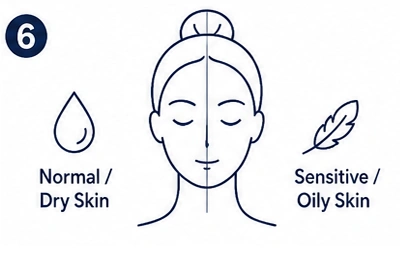
Skin Type & Sensitivity
Dry, oily, combination, and sensitive skin can respond differently to the same serum. Consider whether the formula is lightweight, richer, simple, or packed with additional ingredients and how that may fit your own skincare routine.
What to Avoid
Before choosing a hyaluronic acid serum, watch for unnecessary ingredients, uncomfortable textures, and unclear formula information.
Strong Fragrance & Unnecessary Ingredients
Be cautious of a hydrating serum with strong fragrance, essential oils, or too many unnecessary extras. A simpler formula may be easier to tolerate, especially for people with sensitive skin.

Heavy, Sticky Formulas That Don’t Layer Well
Avoid serums that leave an overly sticky or heavy finish or tend to pill when layered with moisturizer, sunscreen, or makeup. A serum should fit comfortably into an everyday skincare routine.
Unclear Formula & Ingredient Information
Be cautious when it is difficult to tell which forms of hyaluronic acid are used or what the main supporting ingredients are. Clear formula information makes it much easier to compare one serum with another.
Top 5 Hyaluronic Acid Serums 2026
KIYOSENSE 6D Hyaluronic Acid Serum
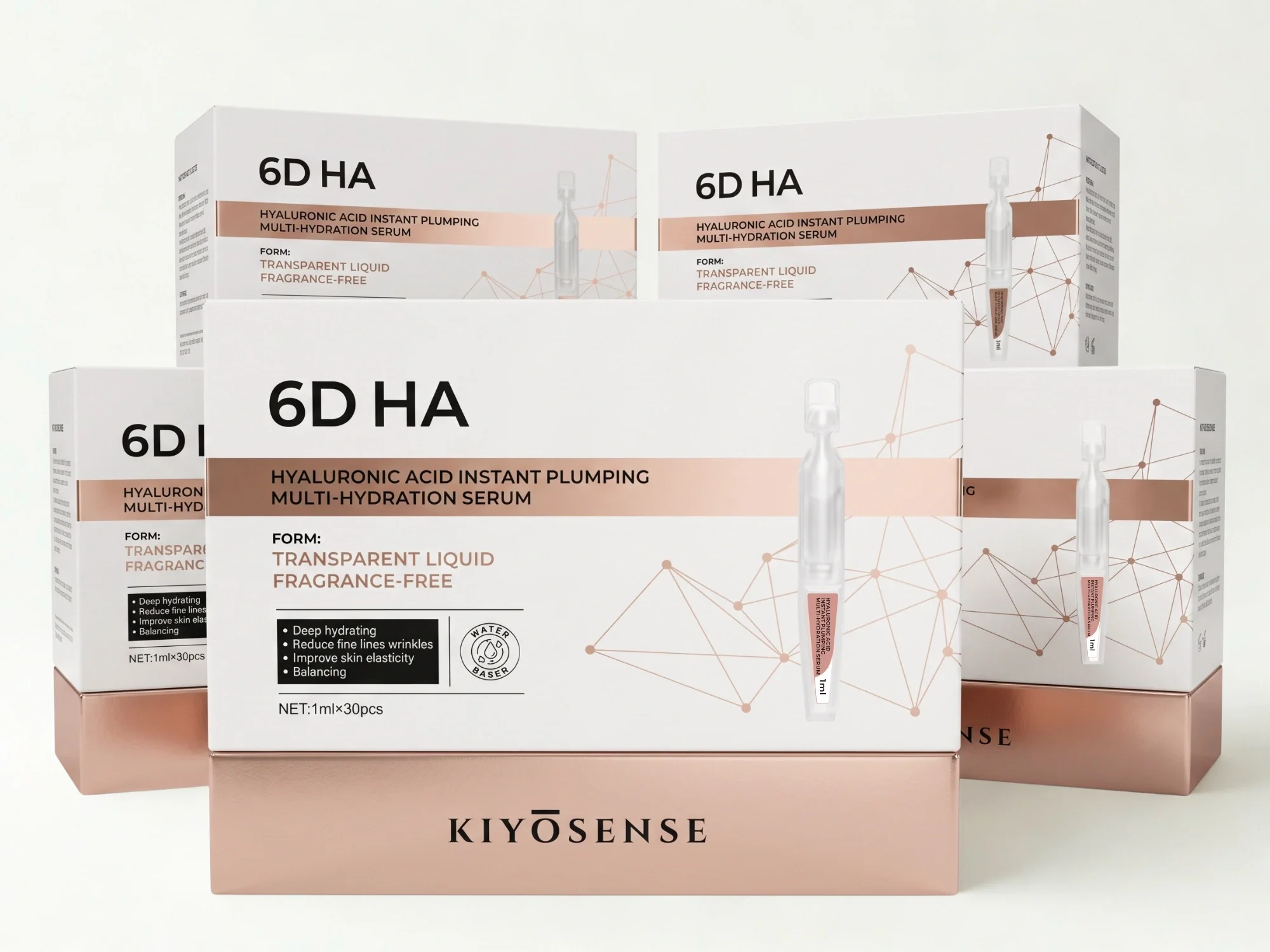
Multi-Level Hydration. Fresh Every Time.
A lightweight hydration-focused serum formulated for plumper, smoother-looking skin, with a fresh 1mL application ready whenever you need it.
Why It Ranks #1
- More complete HA approach — combines a multi-weight hyaluronic acid system with an individually portioned format instead of relying on a basic bottled HA routine.
- Freshness built into the format — each application remains sealed until you're ready to use it, with no repeatedly opened serum bottle.
- Easy to fit into daily skincare — the lightweight, pre-portioned format works naturally in morning, evening or travel routines.
Pros
- Helps skin look plumper and smoother
- Helps soften the appearance of dryness-related fine lines
- Lightweight and easy to layer with other skincare
- 30 pre-portioned applications per box
- No dropper or pump measuring needed
- Convenient for use at home or while traveling
Things to Consider
- Ampoule format may not suit everyone
Best For
Dumie 3% Hyaluronic Acid Serum
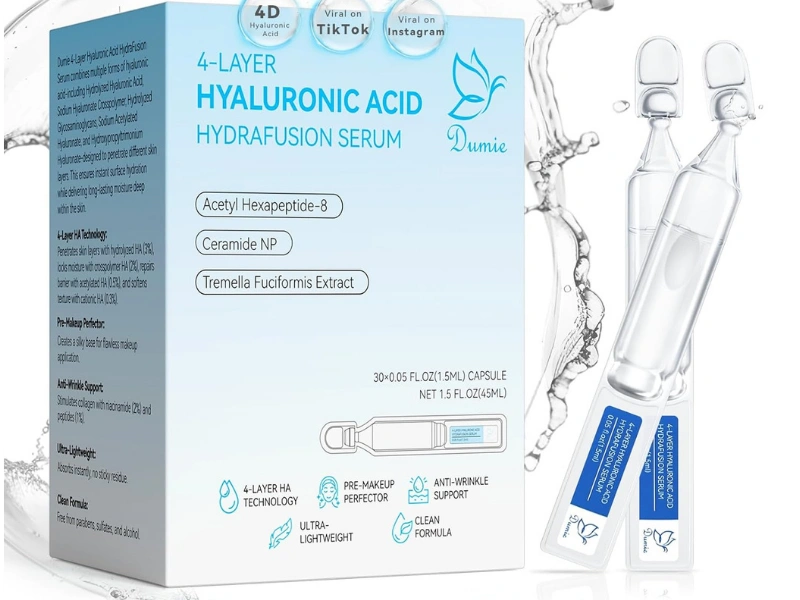
HA with Supporting Skincare Ingredients
A multi-ingredient option combining hyaluronic acid with ceramide, peptides and supporting skincare ingredients for shoppers who prefer a broader formula.
Pros
- HA paired with ceramide, peptides, niacinamide & panthenol
- Single-use tubes are convenient for travel
- Generous total serum amount
Things to Consider
- Broader formula may not suit minimalist routines
Best For
For shoppers who prefer HA combined with several supporting skincare ingredients.
For shoppers who like individually portioned applications for everyday use.
CHEOKINGBA 4% 8D Hyaluronic Acid Serum
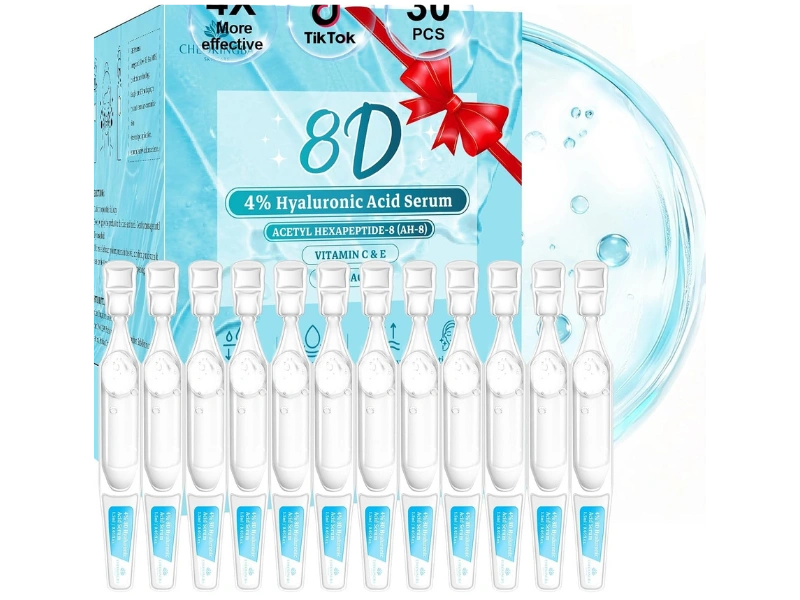
Multi-Ingredient Ampoule Format
An ampoule-format HA serum with a broader ingredient mix for shoppers who prefer individually portioned skincare and a multi-ingredient formula.
Pros
- Eight-form HA positioning
- Includes peptide, niacinamide, ceramide & squalane
- Portable individually portioned ampoules
Things to Consider
- Stated percentage should not be read as pure HA concentration
Best For
For shoppers interested in a broader ingredient mix rather than a simpler HA-focused serum.
For shoppers who prefer individually portioned applications.
WNP 3% 4D Hyaluronic Acid Serum
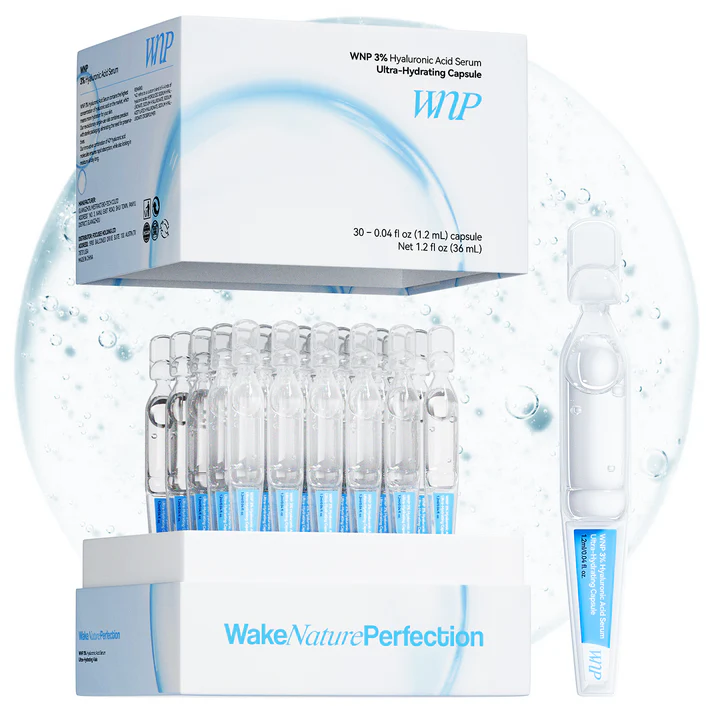
Simple Everyday HA Option
A straightforward, lightweight HA serum designed to fit easily into an existing skincare routine and layer before moisturizer, SPF or makeup.
Pros
- Four clearly identified HA forms
- Glycerin plus additional humectants
- Lightweight formula for easy layering
Things to Consider
- Listed formula includes fragrance
Best For
For shoppers who prefer a simpler, lightweight HA serum.
For shoppers looking for a serum format that fits easily into an existing skincare routine.
TRSTAY LUXE Salmon DNA PDRN Serum
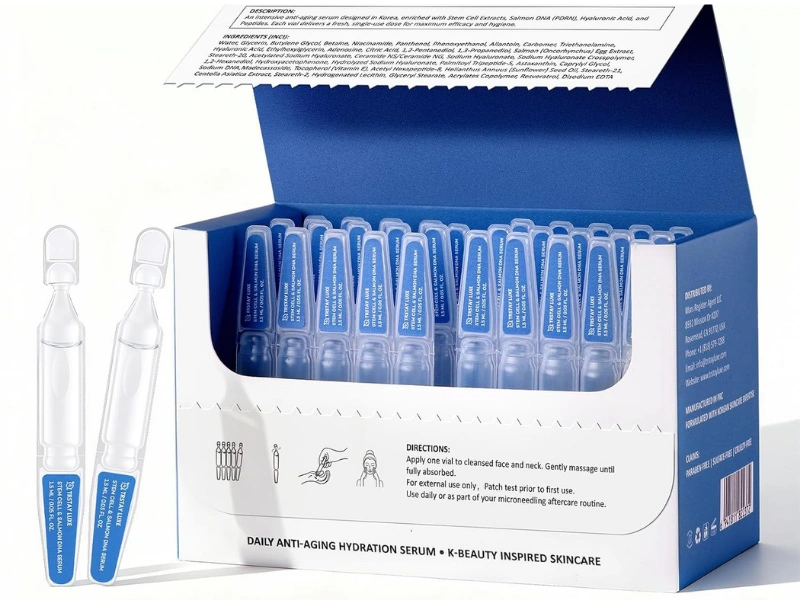
Specialized Multi-Ingredient Option
A specialized formula combining hyaluronic acid with salmon-derived PDRN, peptides and supporting skincare ingredients for shoppers interested in this specific ingredient mix.
Pros
- Combines HA with salmon-derived PDRN
- Includes peptide, niacinamide & ceramide ingredients
- Individually portioned format
Things to Consider
- Not suitable for shoppers avoiding animal-derived ingredients
Best For
For shoppers specifically interested in a formula combining HA with PDRN ingredients.
For shoppers who prefer an ingredient-specific serum rather than a straightforward HA option.
KIYOSENSE vs. Dumie: Which One Fits Your Routine?
Our top two picks take different approaches. KIYOSENSE prioritizes a focused hydration system and streamlined ingredient list, while Dumie leans toward a broader multi-active formula.
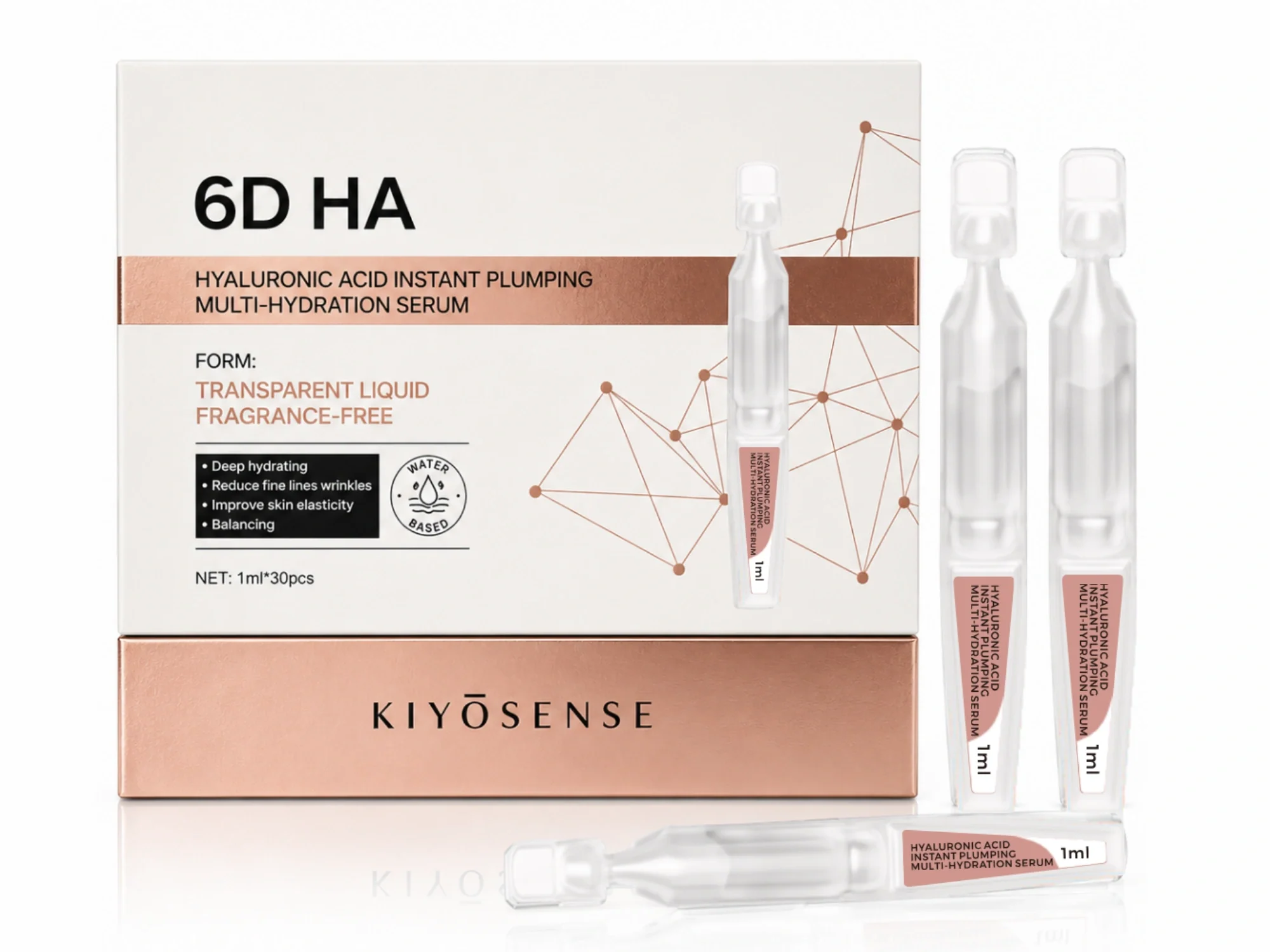
KIYOSENSE 6D Hyaluronic Acid Serum
Best for focused hydration, a streamlined formula and fresh single-dose use.
Dumie 3% Hyaluronic Acid Serum
Best for shoppers who prefer HA with several supporting skincare ingredients.
Comparison is based on stated product features, formula positioning, packaging and routine convenience. Cosmetic results and individual preferences may vary.
How to Choose the Right Hyaluronic Acid Serum
Ignore the biggest percentage or highest “D” number for a moment. A better comparison looks at the HA system, supporting ingredients, texture, packaging, and how easily the serum fits your routine.
1. Look Beyond the “D” Number
4D, 6D, or 8D can describe a brand’s multi-form or multi-weight HA system, but the number alone does not tell you whether the formula is better. Look for clearly identified HA forms or molecular weights.
2. Decide: Focused or Multi-Active?
A focused serum keeps hydration simple. A multi-active formula may add peptides, niacinamide, ceramides, panthenol, or other ingredients. Neither approach is automatically better—the right one depends on your routine.
3. Check Texture & Layering
A good daily HA serum should sit comfortably under moisturizer, sunscreen, or makeup. If your routine has several steps, lightweight and fast-absorbing formulas are usually easier to layer.
4. Compare Packaging & Freshness
Droppers, pumps, tubes, and sealed ampoules all have trade-offs. Individually sealed portions keep unopened product separate, while multi-use bottles may create less packaging waste.
5. Compare the Amount You Actually Get
Look at total volume and the amount intended per application—not just the headline percentage. A larger dose is not necessarily better if you routinely use only a small amount.
6. Read the Full INCI List
Check the complete ingredient declaration for humectants, supporting ingredients, fragrance, and anything you personally prefer to avoid. The front-of-box claims rarely tell the whole story.
Focused vs. Multi-Active
One of the easiest ways to narrow your options is to decide how much you want your HA serum to do.
Quick Buying Checklist
Before you choose, check these six things.
- Are the HA forms or weights clearly explained?
- Does the formula match the rest of your routine?
- Will the texture layer comfortably?
- Is the packaging practical for how you use serum?
- How much product are you actually getting?
- Does the full ingredient list suit your preferences?
Hyaluronic Acid Serum Questions Answered
Quick answers about HA systems, ingredients, ampoules, application, layering, and what to check before choosing a serum.
Which hyaluronic acid serum ranks best overall?
KIYOSENSE 6D Hyaluronic Acid Serum is our #1 overall pick. It stands out for its clearly stated six-weight HA system, focused hydration formula, 30 individually sealed 1 mL ampoules, and straightforward daily-use format.
What does “6D Hyaluronic Acid” mean?
“6D” is KIYOSENSE’s name for its multi-weight hyaluronic acid system. The product states six molecular weights: 1500, 1000, 500, 300, 100, and 50 kDa. The number describes the formula system; it should not be treated as a performance score.
Is a higher “D” number or percentage automatically better?
No. A larger “D” number or headline percentage does not automatically make one serum better. Compare the actual HA forms or weights, full ingredient list, texture, packaging, portion size, and how the formula fits your routine.
What is in the KIYOSENSE 6D formula?
The provided KIYOSENSE ingredient declaration lists Aqua, Butylene Glycol, 1,2-Hexanediol, Pentylene Glycol, Lactobacillus/Soymilk Ferment Filtrate, Acrylates/C10-30 Alkyl Acrylate Crosspolymer, Arginine, Sodium Hyaluronate, Hydrolyzed Sodium Hyaluronate, and Disodium EDTA. That gives it a relatively streamlined, hydration-focused ingredient profile.
Does KIYOSENSE list fragrance in its ingredient declaration?
No fragrance or parfum is listed in the ingredient declaration provided for KIYOSENSE 6D. Because formulas can change, check the current package or official product page if fragrance is an important consideration for you.
What is the benefit of individually sealed ampoules?
Individually sealed ampoules keep the remaining portions unopened until they are needed and make it easier to use a consistent amount each time. KIYOSENSE provides 30 sealed 1 mL ampoules, which can also be convenient for travel.
How much hyaluronic acid serum do I need per use?
Use the amount stated in the product directions rather than assuming more is better. KIYOSENSE portions 1 mL per ampoule. The right amount depends on whether you apply serum only to the face or also to the neck and upper chest.
Can hyaluronic acid serum be used under makeup?
Yes, a lightweight HA serum can usually fit beneath moisturizer, sunscreen, and makeup. Apply a thin layer, allow it to settle, and then continue with the next step in your routine.
Should hyaluronic acid serum be applied to damp skin?
Follow the directions for the serum you are using. Many people prefer applying HA serum to clean, slightly damp skin and then following with moisturizer, but the product instructions should take priority.
Can ingredient lists, packaging, and offers change?
Yes. Formulas, packaging, availability, discounts, and shipping terms can change. Review the current product label and official offer page before purchasing.
Research on Topical Hyaluronic Acid
The studies below provide background on topical hyaluronic acid, molecular weight, skin penetration, hydration, and formulation design.
Human skin penetration of hyaluronic acid of different molecular weights as probed by Raman spectroscopy
Raman micro-imaging found different skin-permeation behavior across HA molecular weights; lower-molecular-weight HA in the tested range penetrated the stratum corneum more readily than the high-molecular-weight HA evaluated.
View on PubMedEfficacy of cream-based novel formulations of hyaluronic acid of different molecular weights
In 76 women, topical 0.1% HA formulations with several molecular weights were compared with vehicle control. The study reported changes in hydration and elasticity across the tested HA formulations, with molecular-weight-dependent differences in some measurements.
View on PubMedClinical Evaluation of a Multi-Modal Facial Serum That Addresses Hyaluronic Acid Levels in Skin
A 12-week facial study in 59 women evaluated a multi-ingredient serum containing HA using clinical grading and bioinstrumentation. The tested formulation was associated with improvements in measured stratum-corneum hydration at week 12.
View on PubMedProspective, randomized, investigator-blinded evaluation of a topical crosslinked hyaluronic acid serum
This controlled split-face study enrolled 24 women following cosmetic procedures. The side treated with the study HA serum showed higher measured hydration than the untreated side. The formulation was proprietary and is not equivalent to other HA serums.
View on PubMedHyaluronic acid skin penetration evaluated by tape stripping using ELISA kit assay
Researchers validated a method for measuring HA in the stratum corneum and used it after repeated topical application of a formulation containing high- and low-molecular-weight HA. The study demonstrated measurable HA accumulation in the stratum corneum.
View on PubMedEffectiveness of topical hyaluronic acid of different molecular weights in xerosis cutis treatment in elderly
In a double-blind randomized trial of 36 adults aged 60–80 with dry skin, low-molecular-weight HA moisturizer produced greater skin-capacitance measurements after four weeks than the high-molecular-weight HA and vehicle comparators.
View on PubMedTopical Hyaluronic Acid Facial Cream with New Micronized Molecule Technology
This multi-part study examined a specific micronized-HA cream using in-vitro, ex-vivo and open-label clinical methods. The authors reported epidermal penetration of the tested formulation and increased hydration measurements, while noting the need for larger randomized controlled studies.
View on PubMedReferences are provided for general educational context. Study designs, formulations, molecular weights, concentrations, populations, and endpoints differ, so findings from one formulation should not be generalized to another product.